
# AC Maintenance in Jeddah: How Often to Service (and Why It Pays Off)
There are two kinds of people here. The ones who service their AC every year like clockwork, and the ones who never think about it until the day it dies, usually in the third week of July, when it’s 43 outside and every technician in the city is fully booked. I meet a lot more of the second kind.
I get why. The AC’s working, the room’s cold, so why pay someone to poke at it? Fair enough. But AC maintenance in Jeddah isn’t really optional the way it is in a mild climate. Our units work harder, in worse conditions, than almost anywhere. Let me explain what I mean by that, and what a service actually does.
How often should you service it?
Once a year at the very least. Twice if you can manage it.
The honest version: get it serviced before summer, ideally in spring, so it’s ready before the real heat lands. Most people here run their AC hard, ten or more hours a day for months on end, and if that’s you, a second check around mid-summer is money well spent. I’ve seen units clogged solid by August that were spotless when I looked at them in April.
Why so often? It’s the coast. The salty, humid air off the Red Sea corrodes metal and eats away at coils faster than dry inland air does. Add the dust that cakes onto everything, and a unit that would happily go two years between services in a gentler climate really does need looking at every single one here.
What a proper service actually includes
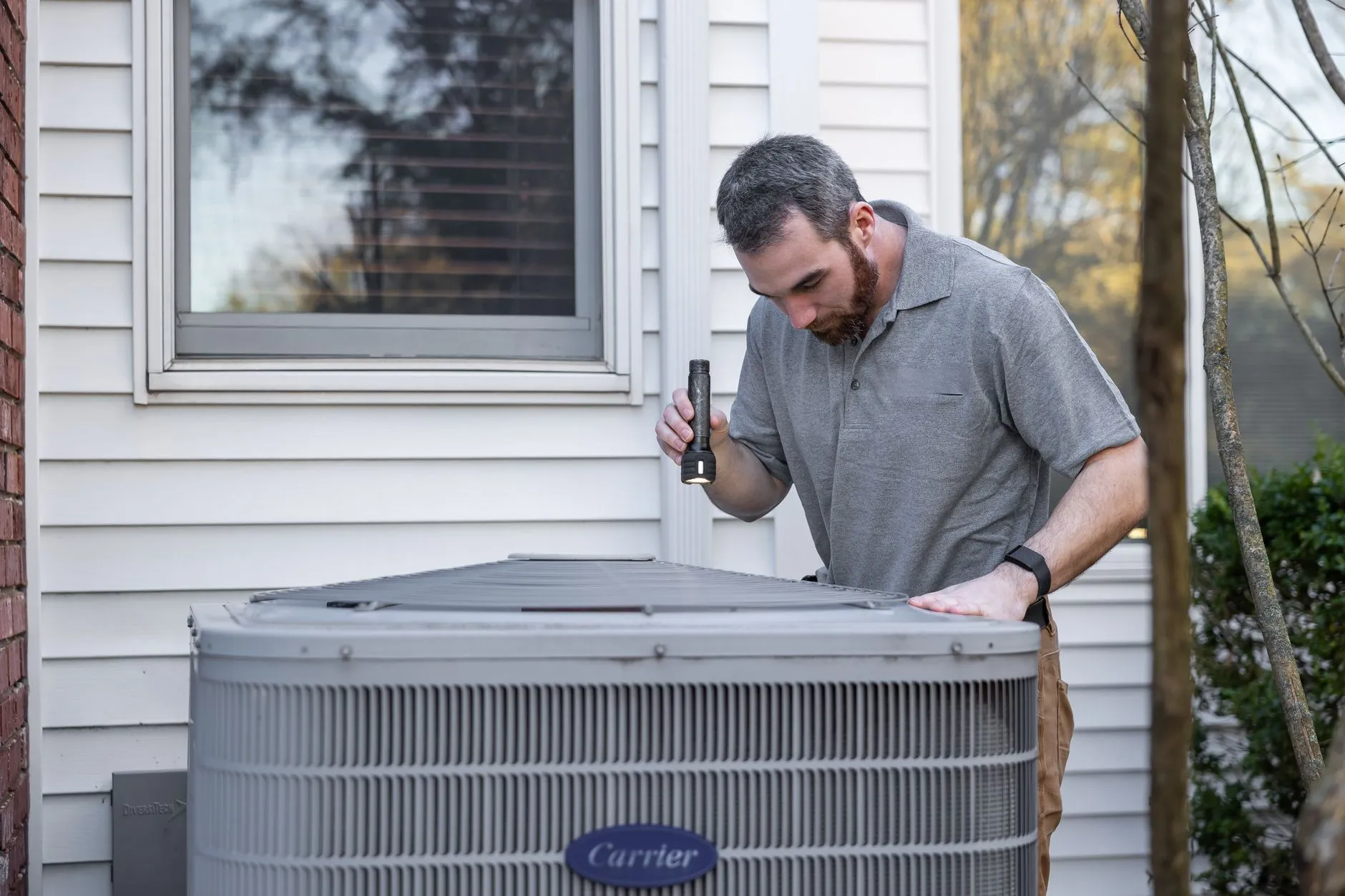
This is where people get short-changed, so pay attention. A real maintenance visit isn’t just spraying the filter and leaving. When I service a split unit, I’m doing roughly this:
- Cleaning the coils, both the indoor set and the outdoor condenser. This is the big one. Dusty, salt-crusted coils can’t shed heat, so the unit runs longer and cools less.
- Checking the refrigerant, both the pressure and for any sign of a leak. Low gas is the quiet reason a lot of ACs slowly stop cooling.
- Washing or replacing the filter, and showing you how to do it yourself.
- Going over the electrical side: the capacitor, the contactor, the connections. Heat and time loosen and burn these, and a weak capacitor is the number-one reason a compressor hums but won’t start.
- Clearing the drain line. A blocked condensate drain is how you end up with water dripping down your wall, and in our humidity these fill up fast.
If someone “services” your AC in five minutes and never touches the outdoor unit, you didn’t get a service. You got a rinse.
What you can do yourself between visits
Plenty, actually, and I’d rather you did. The filter is the main one. Pull it out, rinse it under the tap, let it dry, put it back. Do that monthly in summer. It takes two minutes and it’s the single thing that most affects how well your AC cools.
Keep the outdoor unit clear too. Don’t stack boxes or bins against it, and don’t let it sit in a pile of dust and leaves. It needs to breathe. And if you notice water pooling near the indoor unit, that’s the drain telling you it’s blocked, so it’s worth a call before it stains the ceiling.
That’s about the limit of safe DIY, though, which brings me to the line.
Where DIY stops
Filters, keeping things clear, a quick visual check: all yours. Anything involving the refrigerant, opening up the electrical side, or dismantling the unit is not a DIY job, and I don’t say that just to sell you a service. Refrigerant needs proper handling. The electrical side can hurt you. And on a lot of units, opening it yourself voids whatever warranty you’ve got left, so a “free” DIY fix can quietly cost you a paid repair down the line.
If your AC is already struggling, with warm air, strange noises, or a tripping breaker, that’s past maintenance and into repair. I wrote a separate piece on AC not cooling if that’s where you are right now.
So what does maintenance cost?
It depends on what the unit needs, and I won’t quote you a number here that turns out wrong when I’m standing in front of it. A straight maintenance visit is modest, though. It’s the cheapest money you’ll spend on that AC all year, and a lot less than an emergency call-out in peak summer when it finally gives up. If any parts turn out to be worn, I’ll show you and quote before doing anything. Ask me for a price and I’ll give you a straight one.
Honestly? The people who service once a year almost never call me in a panic in July. The ones who never do, always. Make of that what you will.
FAQ
How often should I service my AC in Saudi Arabia? Once a year at minimum, ideally before summer. If you run it heavily, which most people in Jeddah do, a second check mid-summer is worth it, because the coast’s salt air and dust clog and corrode units faster than a dry climate would.
What does an AC service actually include? Cleaning the indoor and outdoor coils, checking refrigerant pressure and for leaks, cleaning or replacing the filter, checking the electrical parts (capacitor, contactor, connections), and clearing the condensate drain. A quick filter spray on its own isn’t a real service.
Is annual AC maintenance worth it? Yes, for a unit working this hard. A maintenance visit costs a fraction of an emergency summer repair, and it catches the small things, like a weak capacitor, a corroding coil, or low gas, before they leave you with no cooling in peak heat.
Can I service my AC myself? The safe parts, yes: rinsing the filter monthly, keeping the outdoor unit clear, watching for drain leaks. Refrigerant, the electrical side, and opening the unit should go to a technician, both for safety and to avoid voiding your warranty.
When is the best time to service an AC in Jeddah? Spring, before the serious heat arrives. It means the unit is ready when you need it most, and you’re not waiting in the queue that forms the moment everyone’s AC starts failing at once in July.
Written by Ashraful Islam, AC and plumbing technician working across Jeddah since 2016. Want a unit serviced before summer? Book a technician.