
# How to Cut Your AC Electricity Bill in the Jeddah Summer
Every July I get the same message from customers, usually with a photo of their SEC bill attached. The number has doubled, sometimes tripled, and they want to know what’s wrong with their AC. Most of the time nothing is wrong with it. It’s just doing its job in 43-degree heat, and cooling is expensive here. In a typical Jeddah home in summer, air conditioning is somewhere between 60 and 70 percent of the whole electricity bill. Everything else, the fridge, the lights, the washing machine, is the small change.
So if you want a smaller bill, the AC is where the savings are. Here’s exactly where, in the order that saves you the most money, and I’ll give you the real numbers instead of vague advice.
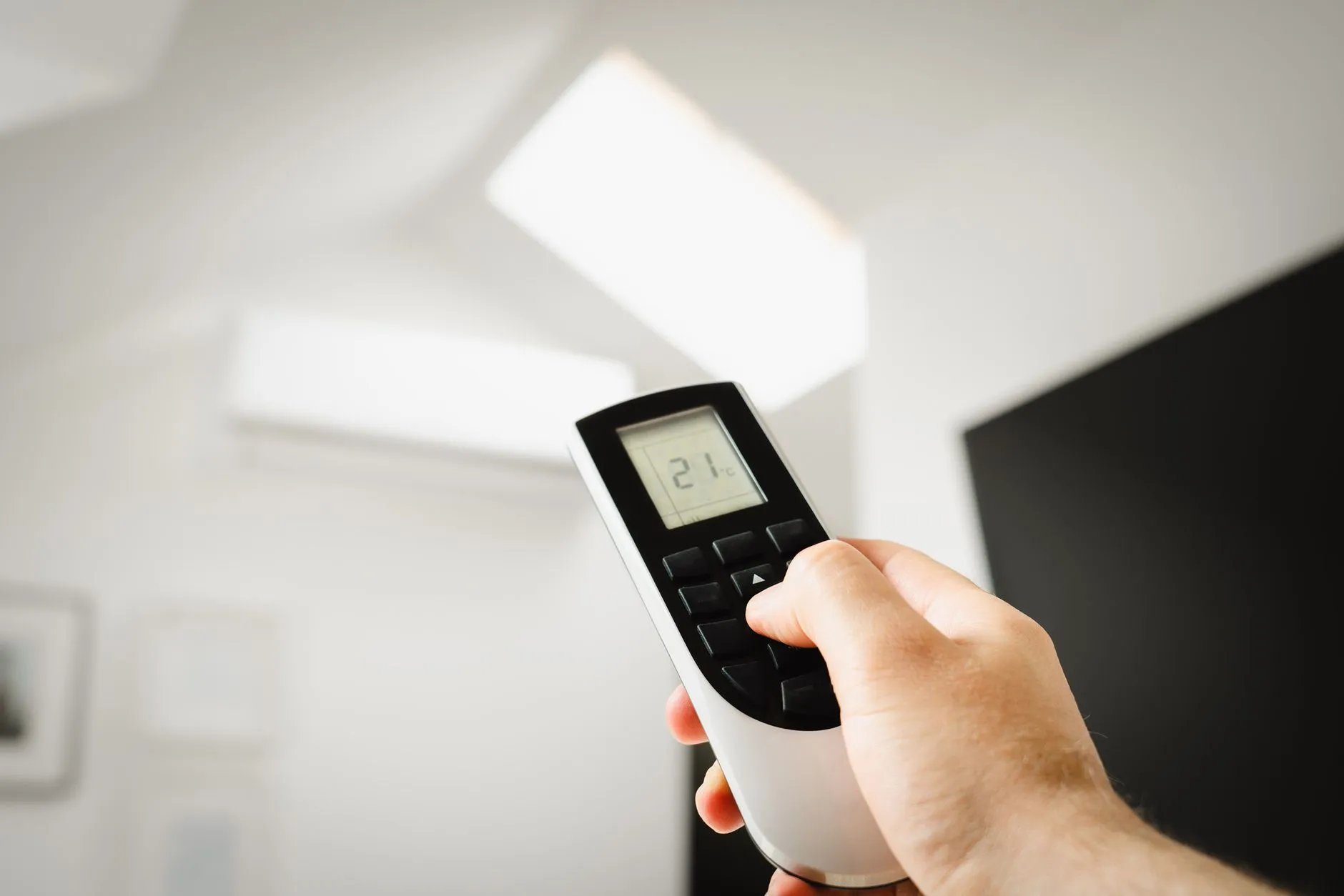
Set the thermostat to 24, not 18
This is the single biggest lever, and it’s free. As a rough rule, every degree cooler you ask for adds around 6 percent to the energy that unit uses. So the difference between setting it to 18 and setting it to 24 isn’t small. It’s roughly a third of that unit’s running cost, month after month.
Saudi Arabia has actually run national campaigns around the 24-degree setting for exactly this reason. And here’s the part people don’t believe until they try it: at 24 with a fan on, most rooms feel perfectly comfortable within a few minutes. Your body doesn’t know the difference between 22 and 24. Your bill does.
Set it to 24. If that feels warm at first, drop it to 23, but no lower. You will genuinely stop noticing within a week.
If your unit is old, the unit itself is the problem
There are two kinds of split AC out there. Old fixed-speed units, which run the compressor flat out and then switch it fully off, over and over. And inverter units, which vary the compressor speed to hold the temperature steadily. An inverter unit uses somewhere around 30 to 50 percent less electricity to do the same cooling.
If your AC is ten or more years old and running all summer, this matters. I’ve had customers cut their summer bill by a third just by replacing one ancient bedroom unit with a modern inverter one. I’m not going to pretend a new unit is cheap, and I’ll never push you toward one you don’t need. But if you’re running a fifteen-year-old machine twelve hours a day, the maths often works out inside two or three summers.
Keep the filter clean, because a dirty one is a tax
I say this in almost every article I write, and I’ll keep saying it. A clogged filter makes the unit fight for airflow, and a fighting unit draws more power. A properly dirty filter can add somewhere between 5 and 15 percent to running cost, and it’s the easiest thing in this whole list to fix.
Pull the filter, rinse it under the tap, let it dry, put it back. Once a month in summer. Two minutes. In Jeddah, with the dust and the coastal air, the filters clog faster than the manuals assume, so don’t go by the once-a-season advice printed for cooler countries.
Get the coils cleaned once a year
Behind the filter, deeper in the unit and out on the condenser, are the coils. When they’re coated in dust and salt, they can’t move heat efficiently, so the compressor runs longer for the same result, and longer running is more kilowatt-hours. This is the part of a proper AC maintenance visit that most directly shows up on your bill. A clean system simply cools with less runtime.
Seal the room and shade the windows
You’re paying to cool air, so stop letting it leak out. Gaps under doors, an open window in another room, a curtain left open on a west-facing window in the afternoon, all of it makes the unit run longer. West and south windows in Jeddah take a brutal amount of sun. A closed curtain or a reflective film on those can noticeably cut how hard the AC works in the afternoon.
And size matters. A unit too small for the room runs constantly and never wins. One too big cools fast then short-cycles, which is inefficient and hard on the compressor. If a room has never cooled properly, the unit may simply be the wrong size for it, and no setting will fix that.
The habits that quietly waste money
A few things I see constantly:
- Cranking it to 16 to cool the room faster. It doesn’t work. The AC cools at the same rate whether you set 16 or 24. All you’ve done is tell it to overshoot to 16, so it runs far longer than it needed to. Set the temperature you actually want and leave it.
- Cooling empty rooms. If you’re all in the living room, there’s no reason three bedrooms are at 20 degrees. Cool the space you’re in.
- Switching it off completely when you pop out for an hour. For a short trip, raising the setpoint a few degrees is often better than switching off and then forcing the unit to drag a hot room back down when you return. For a long absence, off is fine.
Use a fan with it
A ceiling or standing fan costs almost nothing to run compared to an AC. Moving air makes you feel two or three degrees cooler than the actual temperature, which means you can set the AC to 25 or 26 and still feel comfortable. That’s another slice off the bill for the price of running a fan. It’s the cheapest upgrade on this list.
None of this is dramatic on its own. But stack the thermostat setting, a clean filter, a serviced system, and a fan, and a summer bill coming down by a quarter or more is completely realistic. Start with the thermostat today. It costs nothing and you’ll see it next month.
FAQ
What temperature should I set my AC to save money? 24 degrees is the sweet spot, and it’s the figure Saudi Arabia’s own energy campaigns push. Every degree cooler than that adds roughly 6 percent to the unit’s energy use, so 24 with a fan gives you comfort without the bill of 20 or 18.
Does an inverter AC really use less electricity? Yes, meaningfully. An inverter varies its compressor speed instead of switching fully on and off, which uses around 30 to 50 percent less power for the same cooling. On an old unit running all summer, the saving is real enough to pay back the replacement over a few seasons.
Does closing the AC when I leave save money? For a long absence, yes, switch it off. For a quick hour out, it’s often cheaper to raise the temperature a few degrees than to switch off completely, because pulling a fully heated room back down to temperature uses a burst of energy.
Why is my AC bill so high in summer? Because in a Jeddah home the AC is usually 60 to 70 percent of the whole bill, and in peak heat it runs for many hours a day. A low thermostat setting, a dirty filter, or an old fixed-speed unit each push it higher.
Does a dirty filter increase electricity use? Yes. A clogged filter chokes airflow and makes the unit work harder, which can add roughly 5 to 15 percent to running cost. Rinsing it monthly in summer is the easiest saving there is.
Written by Ashraful Islam, AC and plumbing technician working across Jeddah since 2016. Want your system checked before the next bill? Book a technician.